Friday, February 7, 2014

Surviving Winter... things our family love to do in this cold weather!


On Februray 2, Groundhog Phil saw his own shadow which means we have to endure six more weeks of the cold snowy winter.  It is only February and temperatures are continuously to be below freezing, it seems that there is snow storm advisory almost every week and schools days are extending beyond mid-June (which is not really a major concern as homeschoolers).  Being from a tropical place, I still struggle to survive in this wintry condition.  Below are some activities that we did so far (I have to dig for more ideas for the next six weeks), to keep my kids and my self sane. I have to make a conscious effort not let winter stop us from having FUN while LEARNING at the same time!

1) If you can't beat the cold, join it!  With the help of my down coat, and layers of clothing, I was able to join the kids with some outdoor fun even in the freezing or sometimes below freezing temperatures.

Everyone loves snow man.  To make it more fun (and learn colors and spell words too), we did some snow painting using various food colors, squirt or water bottles and water.  The kids raced on who can 'dress up' their snowman first.  The final verdict... some colorful masterpiece!
Aidan experimenting with colors
A fun way to practice spelling or in this case writing a nice note to mommy.


"Dressing up" their snow man
We punch a hole to the cap of an 
empty water bottles and use it 
as our 'water brush'.


The kids also ventured into making snow caves, snow fort, snow angels and playing snowball fight or just simply going to a local place to enjoy snow sledding.
Believe it or not, the best time (at least for me) of the year to go on trails are during late fall and winter times since you don't have to deal with bugs or bugs spray.  I find this a great way for the kids to spend their energy and to check out some forest inhabitants at this time of the year.  In addition to enjoying nature, going on trails is a perfect venue to investigate tracks left by wild animals or even try some wild edibles that are only seen in the cold weather.  Make sure to check out events in your local Audobon Society or nature parks websites for similar events.
A nice and quiet spot at Betty's Neck
(East Freetown, MA)

Exploring of what's left from
an old barn in Frank Knowles/
Little River Reserve (Dartmouth, MA)
2) Keep warm and cozy! There are days that we just feel staying indoors in our PJ's.

One of the thing we all love doing is cooking besides eating the food we made.  Who doesn't love the smell of freshly baked bread or cookies or pies or whatever is simmering on the stove.  The kids love to help in the kitchen and get their hands dirty.  Cooking, baking, measuring and cutting stuff come pretty handy in teaching my 6 year old fractions and my pre-schooler counting.  Involving kids in the making of their own food also teaches them about eating healthy, safety in the kitchen, builds confidence and promotes creativity.

"I  scream for an ice cream"
Healthy option using yogurt, frozen
berries and some milk and honey.
Getting their hands dirty mixing dough while
learning fractions, how to divide the dough
into equal parts.


Teaching them about fire safety.
is best achieved by letting them experience
 first-hand cooking.
Rolling bread dough for our "Sun"bread
helps Aidan to improve his fine motor skills


Practicing their knife skills 
 

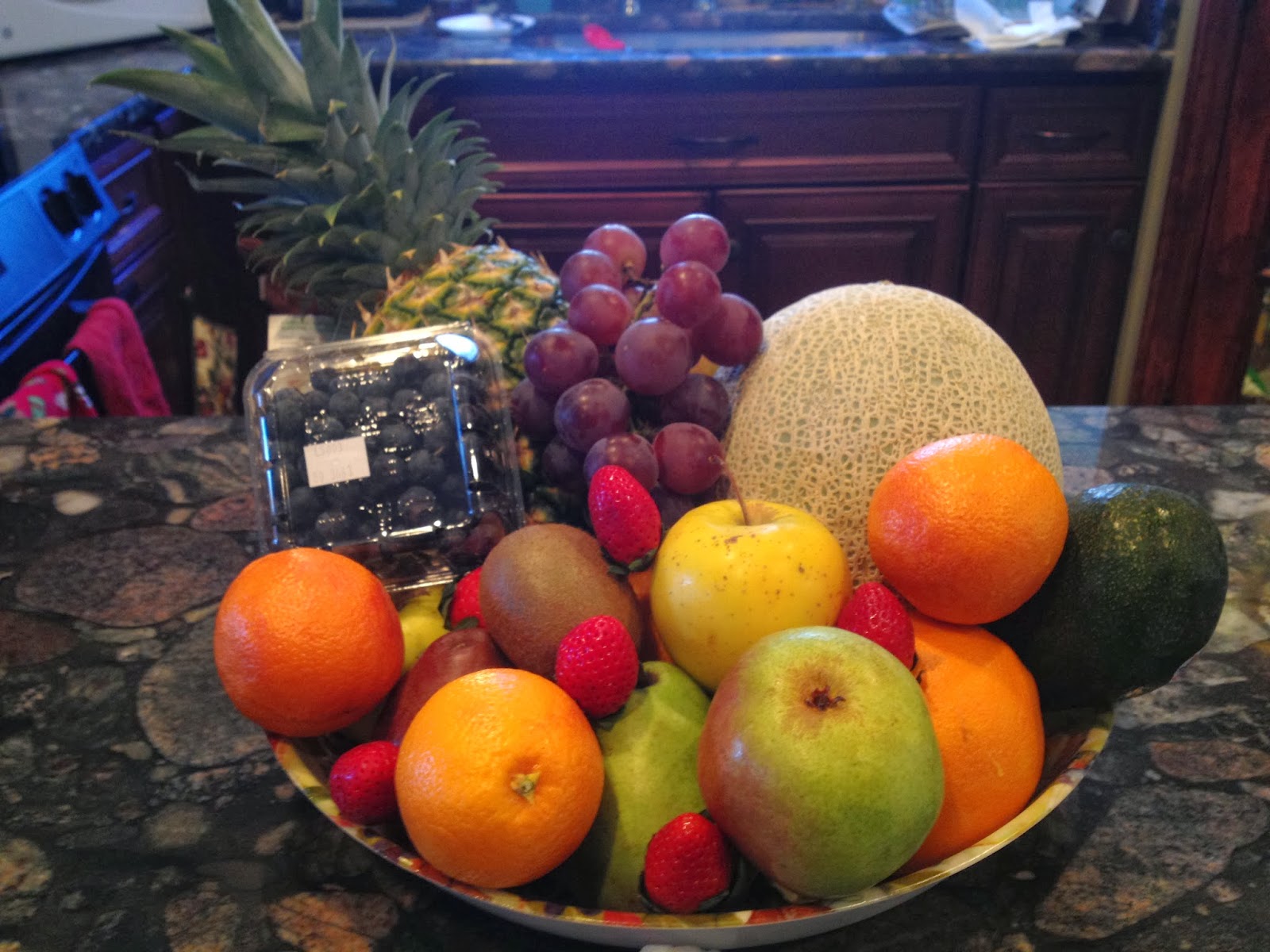
The kids prepared this fruit platter for our breakfast.
Read, Build and Create!

We started to adapt a "Five-In-A-Row"  (find out more about this program from fiveinarow.com)  culture in our learning as a way to approach certain topics of interest.  Currently we are doing Volume 1 of the FIAR series but in addition to the listed books in this series, we also borrow books from the library that the kids want to explore.  After reading a book (could be many times), we use the information that are presented in the book to explore other subject areas such as but not limited to:
  • geography-setting of the story, locating it in a map, popular land marks, topography
  • history- time period when the book was written and how it is evident in the book, historical characters or events in the book
  • social studies - culture ans traditions of a particular place, values and morals of the story
  • art -medium used by the artist, type of art, symmetry, or craft connected to the book among others
  • math -looking for patterns, counting images in the illustration, symmetry
  • science -cooking food related to the place and time period of the book, plants and animals (habitat, behavior, adaptations), buoyancy, senses etc.
We use this world map to identify various places in the books we read.
Coloring  a blank map/countries and drawing a prominent feature
of that place is also a nice alternative to identify various places  from our readings.

From the book "The Story About Ping"  we looked at various ways
to denote movement in drawings, reflection  on water
and lines.
The kids also tested buoyance of various materials in water
as part of our "Ping" lesson.

We read several versions of the "Nutcracker"
and watched a play of it afterwards.  The kids learned
to love the characters in the book so the play
became an enjoyable experience for everyone.


To celebrate the birthday of Martin Luther King Jr. We read this book about the struggles of black people just to learn to read and write.  We also used the book to discuss how we are fortunate to have free access to education and tied it with Dr. King's speech through the "I have a dream...mobil shown above.

After reading the "Sun Bread" book, the kids got inspired to make their own sun bread (recipe at the end of the book) which we enjoyed for lunch later that day.


In this book "Madeline" the kids explore to divide to make equal groups, the symmetry in art and making their own art showing symmetry, the various structures and architectures in Paris, classic literature among others.


Since our visit to New York City couples of years ago, my son was fascinated by the Statue of Liberty.  He was really curious how it was built.  We were fortunate to find this book in our library which has very good illustrations, and thorough discussion of why and how it was built.  The boys also got some very good inspiration from this book in building things using cardboard boxes, Knex, Lego or even using Minecraft creation mode.

It doesn't matter what kind of books interest your child, fiction or non-fiction, modern or classic books,  you will always find ways to extend and connect these books with various subject areas or real life experiences that would have a more lasting impressions in your child's mind (plus the fact that they will develop the love for reading).

Also check out the unit we did for China and Chinese New Year
http://dasilvahomeschooljourney.blogspot.com/2014/01/celebrating-chinese-new-year-with-bang.html

How do you try to survive winter?

Saturday, January 25, 2014

Celebrating Chinese New Year With A BANG!


My eldest son's interest in China, specifically the Great Wall led us to this celebration.  Part of our weekly schedule is going to our local library and borrowing topic books that the boys are interested in.  As easy as it is nowadays to 'google' everything (which we do as well), I still make it to a point that we still utilize information from actual books and make internet searches supplementary.  Anthony asked me, 'What is the largest structure ever built?' (he is really into building stuff now...LEGO's, Minecraft, KNEX, among others) so  I told him about the Great Wall of China.  By coincidence, one of the mom from our home school group posted an event about a Chinese Festival celebration.  That's how we ended up doing a week lesson about Chinese New Year and you can tell, the rest is history.

How do we approach a topic of interest?  We always start with a book or books.  Usually we just ask our librarian for recommendations or sometimes other moms from our home school group for suggestions (both are great resources). We picked this one since the information are presented in a very child-friendly way, lots of pictures, concise but very informative.  It has even additional section for art activities, recipes, and vocabulary words that we all utilized.

.

Circle snakes using different colored construction papers.  In addition to Aidan developing his fine motor skills (cutting papers), we also used this art activity to review colors and shapes, make patterns with the snake's body and promotes creativity.

We've learned about the customs and traditions on how Chinese celebrated New Year and the reasons why they do it that way.  Since the Philippines (where I'm from) celebration , of New Year is very similar to the Chinese (ours is celebrated however during January 1st), I was able to share my own childhood experiences to my boys and relate them to our readings.  Below is a list of some similarities between the Philippines and Chinese ways of celebrating New Year.


  • Cleaning the house the day before New Year but not on the day- to remove 'bad' luck from the previous year and to give way to the 'good' luck of the coming year.
  • Wearing red (putting red signs on windows and doors)- Red is a color for good luck.
  • Having bright and loud noises (fireworks, fire crackers)- to chase away bad spirits.
  • Serving sweet and sticky dishes- to please the gods
  • Having round fruits on the table- round shape of coins, tangerines-color of prosperity; in the Philippines we make a basket with thirteen round fruits to represent the twelve months of the year and the extra fruit for prosperity.
Anthony enjoying the rice cake (recipe taken form the book shown above) with dried fruits that he helped make.  Cooking and baking is a great opportunity to teach/review math concepts like counting and fractions..

Some of the foods we tried at the Chinese Festival
(dumpling, fried mushroom and bean ball with
sesame seeds)
The fruit basket I made this year for the New Year 2014
with thirteen round fruits.


Aidan in front of the food my mom made for New Year celebration (rice cake- puto and cutchinta, rice balls in coconut sauce-bilo bilo).
As an extension, for Literature, we discussed what is a 'legend' since in the book, it told a legend of the bad dragon and how the villagers chased it away from their place (which is a key feature in the celebration of Chinese New Year- dancing dragon on the streets).  I also used this to teach the boys about the phases of the moon, the rotation of the earth and the revolution of the moon around  the earth; since Chinese New Year follows a Lunar calendar.
To pursuit Anthony's initial question about the largest structure on Earth, we also looked at the history of the Great Wall and the engineering behind it.  As an icing on the cake, we went to a Chinese Festival where we were able to enjoy some Chinese customs through traditional dances, food and crafts.
Drum dance


Aidan with the dragon in the back ground.

The boys posing in front of the 'golden' lion.
FYI: For 2014, the Chinese New Year Celebration is on January 31.  Unlike Western New Year celebration, the date of the Chinese New Year changes every year depending on the appearance of the first new moon of the new year.
We hope this can help you celebrate Chinese New Year with a BANG!
 It's just around the corner ... Gong Hei Fat Choy!

Monday, December 9, 2013

Science Fair Ideas


When I heard about the Science Fair that our homeschool group is hosting, I'm sure, I was more excited about it than my son.  As a science person, I am a little biased about my passion in teaching my kids about the fascinating world of SCIENCE.  We've done various investigative activities in matters that piqued their interests, as well as experiments that are related to the curriculum we are using (details of these science investigations will be in another blog that I am working on).  Sometimes I have to hold my self back in pushing it to them so for this project, I asked him first if he wanted to do it or not.  I've got a lukewarm response.  Anthony showed some interest and I feel that the experience will benefit him, so we went for it.  To make it more 'his' project, I made sure that most of the output are his and that I only help and guide him through the process.
The topic of the Science Fair was endangered species.  To help him decide what animal (he decided to work on animal and not plant) he will work on, I brought him to a zoo to search for any endangered animal that might interest him.  This activity became an integral part of this science fair project.  Not only did it helped him choose an animal, it also became a learning process as we go from one animal exhibit to the next.  We took out time to read the information written for each animal that we looked at and it became a mini-lesson about animal ecology, behavior and habitat.  He started asking questions and it gave an opportunity to discussed things with him.  It is amazing how Anthony was able to have a better understanding about what does it mean to be endangered, why and how some animals are endangered and really appreciate the various animal exhibits.  He came up with three endangered species, and at the end he chose to work with the African wild dogs. 


Anthony and Aidan looking at various animal exhibits at the Roger Williams Zoo in Providence, RI
All About Book {A research-based, informative writing project}
We used Miss Jones template in writing an informative book on the African wild dogs
We had two months to work on this science project so my game plan is to work on it 3-4 days in a week, gathering information, writing facts and making the actual materials for the exhibit.  We didn't really follow a strict schedule.  Having enough time allowed us to work on his project in his own phase which minimizes the frustration level for both of us.  As I was browsing one of my favorite website for teaching resources (http://www.teacherspayteachers.com), TeachersPayTeachers  I came up with this lesson on writing by Miss Susan Moran Jones which gave me an idea to 'kill two birds with one stone', meaning Anthony can work on his project and at the same time, provide an opportunity for him to do research, develop writing skills, and learn about various types and parts of books.  I asked Anthony if he will be thrilled to make his own book about the African wild dogs.  I showed him the template of the book and since most of the pages require drawing pictures (which he loves), he was excited to start it.
How did we tackle the writing part?
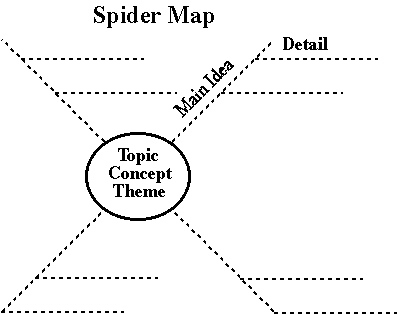
Anthony worked on one page at a time.   We started with going over the various parts of a non-fiction book, and since most of the books we borrowed from the library are non-fiction, we had many samples to look at.  Normally, we looked at a particular page that he is working on that day and explained to him the content of the page/s (what information should be included, the importance of that part of the book), then he worked on with the page of his book.  When it was time for him to write his paragraphs I found it helpful to do a spider diagram of all the information we are looking at.  For example, when he has to write something about the African wild dog's habitat (at this time, he already knew how to use the book's table of contents to find the page of what we need) I read to him that section of the book that has the information we needed and then I asked him after reading, to summarize what he understood and remembered about the theme we were working at.  I used the spider map to lay out his summaries, and he then used the map to write his paragraph.  After he was done with all the pages, and he was satisfied with his finished book, we made copies of the book and gave copies  of them during the fair.  I also bounded the original copy for us to keep.


Anthony working on his non-fiction book on African wild dog
Title page
Anthony also made a diorama showing packs of African wild dogs in their habitat using play dough and Styrofoams.  In addition, Anthony came up with this 'story cube' to add to his exhibit.  Instead of using a tri-fold poster, we used a box and covered it with colored papers.  We made copies of the diagrams he drew for his book, and put them around the box.  My husband helped us to make the box rotate.  We ended up using these materials since they were readily available eliminating the need to buy materials or spend money. 
Rotating 'story cube'
Anthony explaining his project.


I agreed with a lot of moms who participated in this science fair.  Most of the learning are achieved in the process, not in the actual product.  It has been a great experience for us.  More than thirty children participated and their projects show how unique and special each child is.  Overall, this has been a very enriching experience and we are looking forward to the next one.